BACKGROUND
On energy, Kenya is two countries at once.
Ninety-three per cent of the electricity we consume is renewable; geothermal (about 40 per cent), hydro (23 per cent), wind (13 per cent) and solar, from 3,243 megawatts of installed capacity as at February 2026.
The Climate Action Tracker rates our targets ‘Almost Sufficient’, and the National Energy Compact 2025–2030, under Mission 300, commits Kenya to 100 per cent clean power by 2030. In the same breath, the Government has approved the South Lokichar Field Development Plan, redrawn the petroleum map from 63 blocks to 50, and will offer at least ten competitively in the second half of 2026. One hand is switching the country off oil; the other is drilling for it. That contradiction now sits inside every upstream transaction Kenya is about to sign.
Two Mandates, One Legal System
Article 69(1)(a) of the Constitution requires the State to ensure sustainable exploitation of natural resources and equitable sharing of the benefits; the same Article requires it to eliminate activities likely to endanger the environment. Both duties bind one Government at once. The Petroleum Act, 2019 (Cap. 308) lets the Cabinet Secretary and the Energy and Petroleum Regulatory Authority (‘EPRA’) license exploration, development and production. But a petroleum licence never travels alone. The Climate Change Act, 2016 (Cap. 387A) obliges every public entity to build climate into its decisions; EMCA, 1999 supplies the environmental safeguards; the Energy Act, 2019 pushes renewables. The question is not whether Kenya may lawfully develop its oil, it plainly may, but whether every precondition can be met within the Government’s accelerated timelines.
Stranded Assets: Arithmetic, Not Ideology
A stranded asset is one that loses its value before it has paid for itself. The IPCC puts USD 1–4 trillion of fossil fuel assets at risk under a 2°C pathway; Carbon Tracker finds 60–80 per cent of listed reserves unburnable on a Paris-consistent budget. Kenya’s exposure is specific.
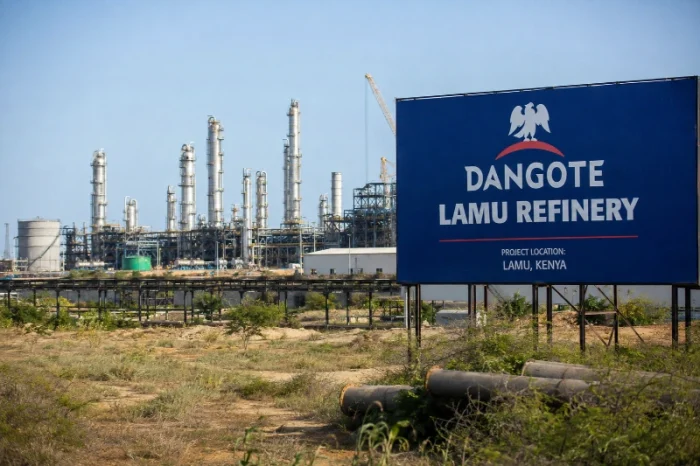
Gulf Energy Limited bought Tullow Oil’s entire Turkana stake for USD 120 million in September 2025 (the Government keeping 25 per cent) and has pledged some USD 6 billion to bring South Lokichar into production by December 2026. Revised terms let it recover costs from up to 85 per cent of annual output, up from 65 per cent. The 895-kilometre Lokichar–Lamu pipeline is shelved as too costly, leaving up to 200 trucks a day hauling crude by road. The Climate Action Tracker warns that continued fossil development risks ‘creating stranded assets that will damage Kenya’s environment and weaken its climate ambitions.’ Stranded-asset modelling belongs in the due diligence file, not the appendix.
Revenue Sharing and Community Consent
Petroleum revenue is shared 75 per cent national, 20 per cent county, 5 per cent community. Turkana and West Pokot are projected to receive USD 173 million and USD 43 million over the project’s life but only after cost recovery, and at 85 per cent that is a long queue. The ground has also shifted: Turkana communities now hold collective title under the Community Land Act, 2016, which requires free, prior and informed consent before development on registered community land.
The County has opened fiscal talks with Gulf Energy, Deputy Governor Dr John Erus calling for ‘open and honest dialogue to ensure the county benefits from oil extracted within its borders.’ Key environmental and social impact assessments remain incomplete.
Local Content: Comply Before You Are Told To
Sections 50 to 52 of the Petroleum Act require the use of Kenyan goods, services and personnel where available. EPRA’s Draft Petroleum (Local Content) Regulations, 2026 are expected to fix thresholds for local employment, procurement preference and technology transfer. Non-compliance invites licence conditions, penalties and, on a strict reading, revocation. Map the supply chain before gazettement, not after the first enforcement letter.
What Global Capital Is Watching
Six climate-disclosure frameworks; ESRS E1, IFRS S2, TCFD, the ECB Climate Guide, NGFS and CDP now expect a stranded-asset assessment. The IEA’s World Energy Outlook 2024 projects oil, gas and coal demand each peaking before 2030, while clean-energy investment runs at nearly USD 2 trillion a year, about double the spend on new fossil supply.
Yet the door has not closed: financing for African upstream is reopening, digitalisation and automation are trimming execution costs, and the National Energy Policy 2025–2034 treats gas as a transitional fuel. The market is neither hostile nor welcoming. It is conditional and the conditions are tightening.
IMMEDIATE ACTION POINTS FOR INVESTORS, FINANCIERS AND THEIR COUNSEL
| Action Item | Who Should Act | Legal Basis |
|---|---|---|
| Run a stranded-asset scenario analysis in upstream due diligence, treating the 2030 clean-energy target and the global transition as material risk factors, not distant policy talk. | Investors; financiers; transaction counsel | Paris Agreement; IPCC AR6; IEA WEO 2024 |
| Confirm that every required Environmental and Social Impact Assessment is complete and approved before capital is committed to South Lokichar or any new block. | Project sponsors; environmental counsel | EMCA, 1999; Petroleum Act, 2019 |
| Verify that free, prior and informed consent has been obtained from registered community land holders before development advances on community land. | Project developers; land and community counsel | Community Land Act, 2016; Constitution, Article 69 |
| Map supply-chain and employment structures against the forthcoming local content thresholds now, ahead of gazettement. | International operators; procurement counsel | Petroleum Act, 2019, ss. 50–52; Draft Local Content Regulations, 2026 |
| Build climate-risk and ESG disclosure into investment committee approvals and transaction documents for any petroleum-sector exposure. | Institutional investors; fund managers; ESG counsel | ESRS E1; IFRS S2; TCFD; Climate Change Act, 2016 |
This article is provided free of charge for information purposes only; it does not constitute legal advice and should not be relied on as such. No responsibility for the accuracy and/or correctness of the information and commentary as set out in the article should be held without seeking specific legal advice on the subject matter. If you have any query regarding the same, please do not hesitate to contact the Litigation Department at Wamae & Allen LLP: Litigation@wamaeallen.com.
About the author

Caxstone specializes in civil, employment and labour disputes, constitutional law, family law and succession, and environment and land matters. He has amassed a wealth of knowledge and experience in litigation which is evident in the successes obtained for clients. He is an active member of the Employment and Labour Relations Court Bar-Bench committee.

Denis Mutugi specializes in Commercial Litigation and Alternative Dispute Resolution.
Denis graduated with a Bachelor of Laws, LLB (Hons) from The University of Nairobi in 2021 and was admitted to the Roll of Advocates of the High Court of Kenya in the year 2023.
Denis has amassed a considerable wealth of experience in conducting legal research on various complex legal matters touching on Commercial, Insurance, Employment and Insolvency law and bankruptcy.