
A commentary on the systemic data risks of unvetted Generative AI and the revolutionary warnings on the forfeiture of legal confidentiality
Introduction
Presently, a new and silent threat has emerged, the Shadow AI. This refers to the unauthorized use of generative artificial intelligence (Gen AI) tools to boost efficiency, often without the oversight from IT and legal departments.
In the case of United States v. Heppner (2026), a federal court was called to determine whether the attorney-client privilege could survive the use of unapproved Generative AI tools.
This ruling, delivered by Judge Jed S. Rakoff, has evolved into a masterclass on the intersection of technology and legal ethics, proving that the law will not be a silent spectator to the usage of unsecured AI platforms.
The Warning on Forfeiting Privilege
The Heppner decision establishes that attorney-client privilege is an active duty rather than a passive right. The court underscored that using consumer-grade AI tools, which typically reserve the right to utilize inputs, precludes any reasonable expectation of confidentiality.
To illustrate this, Judge Rakoff employed the Library Analogy, comparing the use of public AI to taking research notes in a public square. Such actions constitute a voluntary waiver of privilege, as the legal sanctuary cannot retroactively protect communications that were never shielded by a binding mandate of secrecy.
Regulatory Compliance under the Kenyan Data Protection Act
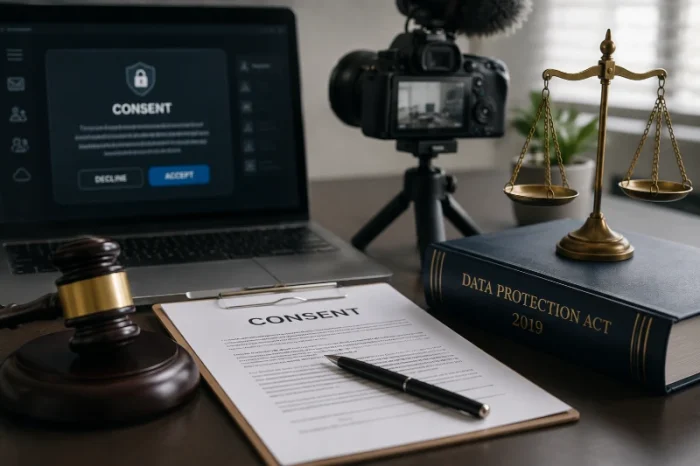
For Kenyan users and practitioners, this judicial trend marks a definitive turning point in risk management, necessitating strict adherence to the Data Protection Act (DPA) 2019 when relying on AI to process personal or clients’ sensitive data.
Submitting regulated data to unvetted AI is now viewed as a non-negotiable breach of privilege. Organizations that treat AI security as an optional suggestion rather than a binding mandate remain vulnerable to severe regulatory sanctions and the total loss of privilege during litigation, as administrative lethargy offers no defense against the obligation to protect data.
A Comparative Analysis of Global Confidentiality Standards
A global tightening of standards is now evident, with the US Heppner Doctrine confirming that uploading material to public AI platforms effectively voids the dominant purpose required for legal privilege.
While the UK explicitly recognizes AI tools as third-party processors and the US emphasizes specific contractual guarantees of confidentiality, all major jurisdictions agree on a core principle. The absence of a vetted, enterprise-grade contractual shield results in the absolute forfeiture of the legal privilege traditionally afforded to professional communications.
Strategic Governance and the Path to Secure Integration
To ensure AI remains a sharp sword for protecting client interests, users must move beyond casual confidentiality and implement robust governance frameworks. This requires a transition to enterprise grade tools that offer explicit contractual guarantees against data training and the adoption of a Zero Trust Architecture where every AI interaction is logged and governed.
Furthermore, professionals must treat AI as a supervised assistant, ensuring all prompts and outputs are generated under direct oversight to preserve work product status.
Conclusion: Privilege as a Protected Right
The era of treating Generative AI as a black box is officially over. The primary takeaway from the current legal landscape is that privilege is a right that must be earned through active protection rather than assumed through tradition. As AI continues to evolve, the burden of maintaining the legal sanctuary remains firmly with the professionals, not the AI platform.
This article is provided free of charge for information purposes only; it does not constitute legal advice and should be relied on as such. No responsibility for the accuracy and/or correctness of the information and commentary as set in the article should be held without seeking specific legal advice on the subject matter. If you have any query regarding the same, please do not hesitate to contact our Data Protection & ICT Law Department vide WAICTLaw@wamaeallen.com
About the author

Preston Ndombi Wawire is an experienced litigator of over 10 years standing and has perfected his art in civil and commercial litigation. He has vast experience in banking and recoveries litigation, insurance and malpractice law, and securities enforcement. Prestone has been involved in some of the most ground breaking litigation in injunctive matters and medical malpractice. Prestone is an active member of the Law Society of Kenya, Environment and Land Court Bar Bench Committee.

Flavious is an Associate in the Real Estate and Securitization Department.
She has vast knowledge and hands on experience in Real Estate, Securitization, Banking, Finance, Company Law, Corporate Governance, Insolvency and Commercial Law. She also has keen interest in policy making and emerging legal commercial issues in general.
She is a promising transactional advocate with exemplary interpersonal skills and exudes diligence, integrity, resilience, confidence and great enthusiasm in all her tasks.

Frankline M. Otieno is a dispute resolution associate, recommended professional and committed to offering sustainable client-centred solutions to legal issues.Frankline is astute in commercial litigation, securities law, banking law, intellectual property litigation, public procurement, land law litigation, Judicial Review and Administrative law litigation, sports law, tax litigation, administrative law, consumer protection law, competition law and constitutional litigation.

Denis Mutugi specializes in Commercial Litigation and Alternative Dispute Resolution.
Denis graduated with a Bachelor of Laws, LLB (Hons) from The University of Nairobi in 2021 and was admitted to the Roll of Advocates of the High Court of Kenya in the year 2023.
Denis has amassed a considerable wealth of experience in conducting legal research on various complex legal matters touching on Commercial, Insurance, Employment and Insolvency law and bankruptcy.

Nadio George is a dedicated Advocate of the High Court of Kenya, passionate about legal excellence, societal progress, and environmental stewardship. Admitted to the Roll of Advocates in 2023, he combines deep legal expertise with a strong commitment to making meaningful contributions to both the legal profession and the community.