“A product’s name is its story, and its origin is its soul.”
Kenya is poised to take a major step in protecting and commercializing its unique local products through the proposed Geographical Indications Bill, 2026 (“the Bill”). If enacted, the Bill will establish a dedicated legal framework for the registration, protection and enforcement of geographical indications in Kenya.
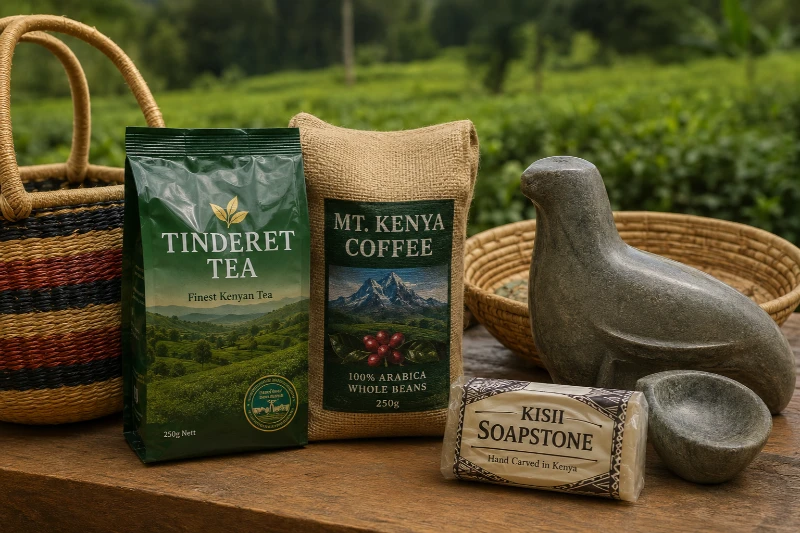
This proposed law is particularly significant for Kenya, a country renowned for region-specific products including but not limited to Tinderet tea, Taita Baskets, Mt. Kenya Coffee, and Kisii Soapstone. Until now, Kenya has lacked a standalone legal regime dedicated to safeguarding such products from imitation, misuse and unfair commercial exploitation.
What is a Geographical Indication?
A geographical indication (“GI”) is a name or sign used on goods that originate from a particular place and possess qualities or a reputation attributable to that place. Well-known global examples include Champagne (France), Darjeeling Tea (India), and Parma Ham (Italy). Under the Bill, Kenyan products with strong regional identity may enjoy similar protection.
Why This Bill Matters
The proposed law is not merely a bureaucratic exercise; it is a strategic economic tool designed to:
- Establish a formal institutional mechanism to safeguard geographical indications.
- Stop the misappropriation of Kenya’s unique products by unauthorized parties.
- Shield the public from deception regarding the true origin or quality of goods.
Key Changes and Innovations
If passed, the Bill will introduce several critical mechanisms that clients and stakeholders should be aware of. These include;
1. A Dedicated Institutional Framework
The Bill designates the Managing Director of the Kenya Industrial Property Institute (KIPI) as the Registrar of Geographical Indications. This centralizes oversight and ensures that experts in industrial property manage the registration process. Furthermore, County Governments are given a pivotal role in mobilizing producers, implementing policies at the local level, and confirming the specific geographical boundaries of a protected area.
2. Protection Without Borders (Registration Optional)
One of the most client-friendly provisions is that protection for a geographical indication is available regardless of whether it is registered or not. However, registration serves as sufficient proof of the indication’s validity in legal disputes, providing a much higher level of security.
3. Strict Quality and Environmental Standards
To register a Geographical Indication (GI), applicants must submit rules governing the management of the geographical indication. These rules must outline:
- Specific production methods and packaging.
- Quality, reputation, and other unique characteristics.
- Environmental conservation measures to curb degradation in the production area.
4. Managing Conflicting Names (Homonymous GIs)
In cases where two different regions use names that sound or look the same (homonymous GIs), the Registrar is empowered to set “practical conditions” to differentiate them, ensuring that producers are treated equitably and consumers are not confused.
5. Registration and Holding of the Rights
The Bill permits an application for registration of a GI to be made either by a producer of the relevant product within the specified geographical area or by a competent authority acting on behalf of the producer community. Upon registration, such applicant assumes the role of the Administrator.
Use of the registered GI in trade is reserved exclusively for producers operating within the designated geographical region and whose goods meet the prescribed standards.
Importantly, the Bill recognizes that a GI is a collective community asset rather than a private commercial right. Accordingly, the Administrator cannot assign the GI, nor use it as security for a charge or mortgage. This protects producer communities from misuse or speculative exploitation of the indication.
It is noteworthy, however, that administration may be transferred to another competent authority, such as a producers’ union or cooperative, to improve governance and enforcement.
Enforcement and Compliance
The Bill strengthens the protection of geographical indications by introducing both civil and criminal enforcement mechanisms:
- Civil Proceedings: Interested parties can move to the High Court to prevent the use of a GI on products that do not originate in the specified place or do not meet the quality requirements. This includes preventing the use of terms like “style,” “kind,” or “imitation”.
- Criminal Penalties: Intentional infringement or making false representations about a GI’s registration status is a criminal offense. Conviction can lead to a fine of up to five million Kenya shillings, imprisonment for at least two years, or both.
Special Provisions for Existing Trademarks
The Bill acknowledges the complexity of existing intellectual property. It allows for the continued use of trademarks in good faith even if they are identical or similar to a newly registered GI. However, the Registrar of Trade Marks can refuse or invalidate new trademarks that might deceive the public about a product’s true origin.
Once registered, a GI is protected as long as its unique characteristics exist. However, a maintenance fee must be paid every ten years to keep the registration active.
Any decision by the Registrar can be appealed to the Court within sixty days.
Conclusion
The Geographical Indications Bill, 2026 is more than a technical intellectual property statute. It is a bold statement that Kenya’s heritage, craftsmanship and regional excellence carry measurable economic value and deserve meaningful legal protection.
For businesses, producer groups, cooperatives and county governments, the proposed law presents an opportunity to transform local identity into commercial strength, opening new pathways for investment, premium markets and global recognition.
If enacted, the Bill could usher in a future where Kenya’s most distinctive products are no longer known merely for where they come from, but protected for what they represent; quality, authenticity and the enduring story of the land itself.
Disclaimer: This article is provided free of charge for information purposes only; it does not constitute legal advice and should be relied on as such. No responsibility for the accuracy and/or correctness of the information and commentary as set in the article should be held without seeking specific legal advice on the subject matter. If you have any query regarding the same, please do not hesitate to contact our Intellectual Property Department vide WAIPLaw@wamaeallen.com
About the author

Peris is a results-driven and disciplined legal professional committed to delivering exceptional value to clients. With expertise across various legal fields, she provides strategic legal solutions tailored to diverse client needs. Her strong interpersonal skills, dedication, and meticulous approach to legal practice enable her to navigate complex legal matters effectively.