“Who Owns the Mind of a Machine? Rethinking Copyright and Trademark Law in the New Age of AI”
The rise of generative artificial intelligence (AI) has disrupted traditional notions of intellectual property. As AI systems autonomously produce visual art, music, literature, and branding assets, legal systems worldwide are grappling with a foundational question: Who owns the rights to works created by machines? This article examines the legal status of copyrights and trademarks generated by AI agents, drawing on recent U.S. jurisprudence, comparative international frameworks, and Kenya’s IP laws.
What happens when a human prompt an AI system? For instance, instructing Chat GPT or DALL·E to produce a design without direct creative input? Current law may deny protection on grounds of insufficient human authorship, leading to potential ownerless works. This could undermine commercial incentives and complicate enforcement.
Courts across major jurisdictions have been consistent ‘machines cannot be authors or inventors’ Such propositions underscore the principle that IP law remains anthropocentric.
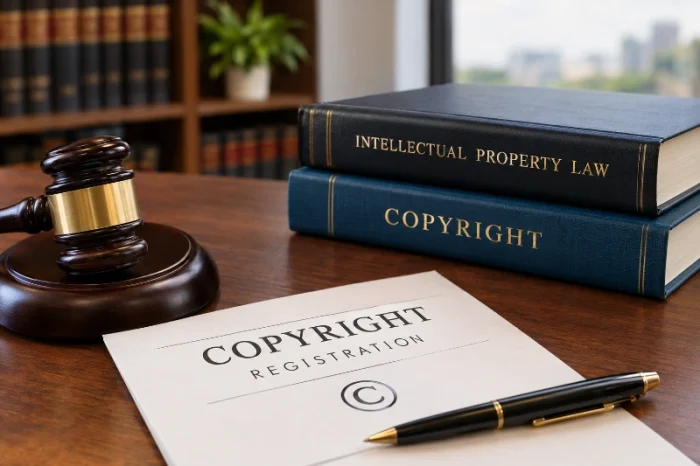
In Thaler v Perlmutter (2023), both the U.S. District Court and the Court of Appeals for the D.C. Circuit held that a work generated autonomously by an AI system, without human input, cannot be copyrighted. The courts affirmed that human authorship is a statutory requirement under the Copyright Act of 1976. In this matter, Dr. Stephen Thaler had sought copyright registration for a visual artwork titled “A Recent Entrance to Paradise”, listing his AI system, the “Creativity Machine” as the sole author. The Copyright Office denied the application, citing the lack of human authorship. Both courts upheld this decision, emphasizing that; The Copyright Act consistently presumes authors to be human beings, referencing attributes such as lifespan, heirs, domicile, and intent, Machines are treated as tools, not creators. The work-for-hire doctrine does not apply where no copyrightable interest exists and Policy arguments about incentivizing AI innovation are for Congress and not for the courts to resolve.
The court distinguished between AI-assisted works and AI Generated works, the former may be copyrightable if a human provides sufficient creative input whereas the latter is created autonomously by machines, which are not eligible for copyright. This distinction is critical and persuasive for jurisdictions considering how to regulate creative outputs involving AI.
Under section 2 of the Kenya’s Copyright Act, an “Author” is defined to mean the creator or originator of a work: for literary, musical, dramatic, or artistic works, it’s the person who created it; for photographs, the person who composed it; for sound recordings and audio-visual works, the person who arranged their creation; for broadcasts, the first broadcaster; for published editions, the publisher; for computer-generated works, the person who arranged their creation; and for computer programs, the person who controlled their development.
Section 22(3) of the Act provides that a literary, musical or artistic work shall not be eligible for copyright unless (a) sufficient effort has been expended on making the work to give it an original character; and (b) the work has been written down, recorded or otherwise reduced to material form.
Section 31 allows for ownership by an employer in cases of employment, but this presumes that the work was created by a human employee.
Nowhere in the Act is there provision for authorship or ownership of works generated autonomously by machines or AI systems. The law does not contemplate assigning rights from AI to developers or users, leaving a clear legislative gap in addressing machine-generated content.
Kenya’s Trademark law, on the other hand, is more flexible. The Trademark Act, Cap 506 focuses on distinctiveness and commercial origin, not authorship. This is because the Act does not define “authorship” or “creator” because trademarks are not works of authorship (as in copyright law). If an AI system generates a logo or slogan, the entity deploying the AI, typically a company, can register and own the trademark.
Kenya should consider the reform paths to align with global trends and support innovation such as amend the Copyright Act (Cap 130) to explicitly recognize AI-assisted works and to attribute authorship to the human arranger or creative contributor. Establish a registration mechanism for AI-generated works, enabling attribution to human initiators (e.g., developers, prompt engineers) and facilitating licensing & enforcement of such rights, development of attribution models that assign ownership to the person who causes the AI to generate the work and lastly, formulateion of a national AI-IP policy, informed by ccomparative jurisprudence and gguidance from WIPO, ARIPO, and other international bodies. This includes empowering institutions such as KECOBO and KIPI to issue practice notes and interim guidance on: protection standards for AI-generated content and registration procedures pending legislative reform.
Artificial Intelligence has undeniably transformed the creative landscape, yet the law remains anchored in traditional notions of human authorship. Kenya’s intellectual property framework, risks excluding an entire class of valuable outputs produced through AI systems. Pragmatic reform is therefore imperative. Kenya must seize this moment to proactively modernize its IP laws, crafting a balanced framework that safeguards innovation while preserving legal certainty. The future of creativity may well be algorithmic, but the law that governs it must remain human-centered, adaptable, and inclusive.
This article is provided free of charge for information purposes only; it does not constitute legal advice and should be relied on as such. No responsibility for the accuracy and/or correctness of the information and commentary as set in the article should be held without seeking specific legal advice on the subject matter. If you have any query regarding the same, please do not hesitate to contact Intellectual Property Department at WAIPLaw@wamaeallen.com
About the author
Caxstone specializes in civil, employment and labour disputes, constitutional law, family law and succession, and environment and land matters. He has amassed a wealth of knowledge and experience in litigation which is evident in the successes obtained for clients. He is an active member of the Employment and Labour Relations Court Bar-Bench committee.