
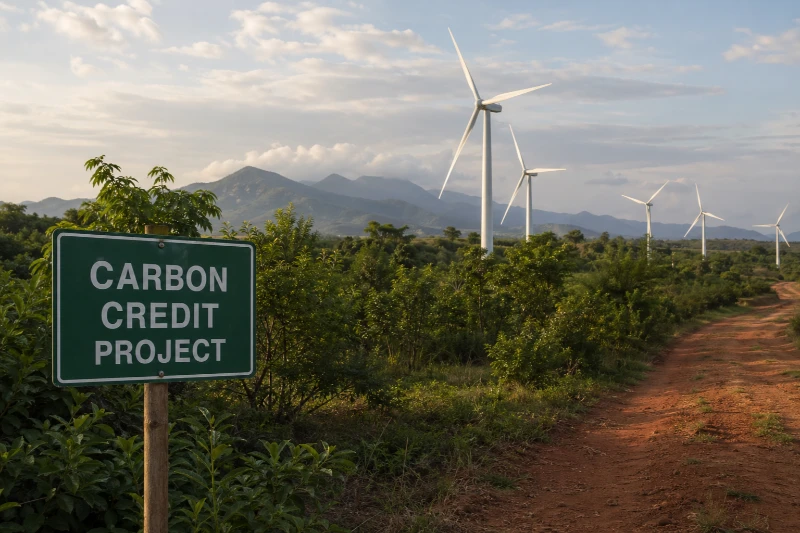
Carbon credits have become indispensable to the global fight against climate change. As the world pivots toward a greener economy, Kenya is steadily establishing itself as a significant player in carbon trading, with carbon credits emerging as a new form of economic currency.
The gazettement of the Climate Change (Carbon Markets) Regulations, 2024 has enabled the country to transition from voluntary offsets to a more structured, legally grounded system. Kenya is also an active member of the Eastern African Alliance on Carbon Markets and Climate Finance (EAA) and has demonstrated growing capacity to engage with Article 6 of the Paris Agreement on carbon market instruments.
Yet beneath this progress lies a complex interplay of regulatory challenges, human rights concerns, and disputes over benefit sharing.
Kenya’s Carbon Market Legal Blueprint
Kenya has operationalised carbon markets under Section 23A of the Climate Change Act, enabling the reduction of greenhouse gas emissions through carbon projects encompassing afforestation, reforestation, nature-based solutions, and carbon offsetting mechanisms that store or utilise CO₂. By embedding environmental integrity within carbon projects from the outset, Kenya is better positioned to meet its Nationally Determined Contributions while strengthening its economic and environmental standing in regional and global carbon markets.
The National Carbon Registry, established under Section 23G of the Climate Change Act and launched in 2026, is mandated to record all projects and track the issuance and transfer of carbon credits, thereby improving transparency and accountability across carbon markets. Additionally, the National Environmental Management Authority (NEMA), serving as the Designated National Authority (DNA), is authorised to oversee carbon market activities, facilitate registration processes, and ensure that all projects deliver measurable climate benefits while advancing sustainable development priorities.
Challenges on the Horizon
Despite these reforms, governance concerns persist — particularly around the management of carbon revenues. Many communities remain unaware of their rights and are consequently ill-equipped to negotiate fair Community Development Agreements (CDAs).
Technical barriers further impede progress. Measuring and verifying carbon reductions demands expertise and resources that are not always accessible. Businesses, policymakers, and local communities frequently lack foundational knowledge about carbon trading and its benefits, underscoring the urgent need for targeted capacity-building programmes to train stakeholders on market mechanics and regulatory compliance.
In Northern Kenya, the Northern Kenya Rangelands Carbon Project faced legal challenges after pastoralist communities alleged that it restricted traditional grazing movements and was implemented without adequate consultation. In Kajiado County, Maasai herders protested carbon initiatives linked to land use changes and opaque benefit-sharing arrangements, triggering disputes over pasture access and project payouts.
Although project proponents endeavour to comply with carbon market regulations, communities are frequently excluded from benefit-sharing negotiations, heightening the risk of inequitable outcomes. Even where CDAs allocate funds for community development, communities are seldom afforded genuine control over spending priorities. As the cases in Northern Kenya and Kajiado County illustrate, these financial and benefit-sharing shortfalls can erode livelihoods and give rise to serious social and human rights concerns.
Conclusion: Building a Transparent and Inclusive Carbon Market
Kenya’s carbon projects must be designed to genuinely benefit local communities. Under Regulation 29 of the Climate Change (Carbon Markets) Regulations, 2024, and as formalised within a CDA, projects are required to direct a portion of their annual earnings to communities as follows:
- Land-based projects: at least forty percent (40%) of profits after business costs; and
- Non-land-based projects: at least twenty-five percent (25%) of profits after costs.
Community-led committees should oversee these funds, provide civic education, secure informed consent from community members, and negotiate equitable terms while ensuring the faithful implementation of Community Development Agreements. Additionally, institutional frameworks – including NEMA and the Environment and Land Court (ELC) — play a pivotal role in enforcing these agreements and carbon project regulations, as well as resolving disputes and safeguarding carbon rights and equitable benefit sharing.
Through genuine collaboration, Kenya can cultivate a carbon market that is vibrant, transparent, and accountable — one that not only reduces emissions but also uplifts communities, protects livelihoods, and creates shared pathways to sustainable development. This is not merely carbon trading; it is a blueprint for a greener, fairer, and more empowered Kenya.
This article is provided free of charge for information purposes only; it does not constitute legal advice and should be relied on as such. No responsibility for the accuracy and/or correctness of the information and commentary as set in the article should be held without seeking specific legal advice on the subject matter. If you have any query regarding the same, please do not hesitate to contact our Banking & Finance, Commercial & Corporate Department vide WACommercial@wamaeallen.com
About the author

Charles is an experienced transactional advocate with over 17 years experience in the legal industry. He is the Managing Partner at Wamae and Allen, an Entrepreneur and a proponent of the Adaptability Quotient(AQ) theory.